
The Geneva Bible, originally published in 1560, is the first English translation to use verse numbering (following the lead set by the Stephanus New Testament), the first to use a Roman instead of a Gothic type (also following the lead of Stephanus who used a Roman type by Claude Garamond). The Puritan tone of its marginal notes made it the primary Bible of English Protestantism in the 16th century. Several copies of it were taken to America on the Mayflower.
The Geneva Bible was translated from the best available Greek and Hebrew texts mostly based on the work of William Tyndale and Myles Coverdale. However, this was the first to have all of the Hebrew Scriptures translated directly from the Hebrew unlike the Coverdale Bible and Matthew Bible which, in part, used Coverdale's translation from the German texts by Huldrych Zwingli and Martin Luther as well as the Latin of the Vulgate amongst other sources.
Several translations were produced in reaction to this Puritan tone by authorities keen to wrestle back some control of the text. These included:
- The Bishops Bible 1568
- The Rheims-Douay Bible 1582-1610
- The King James Bible 1611
Geneva Bible First Edition 1560
This is a page showing the clearer print and verse numbering.
By using the red box as a pointer within the image on the left you can see a magnified version in the image on the right.
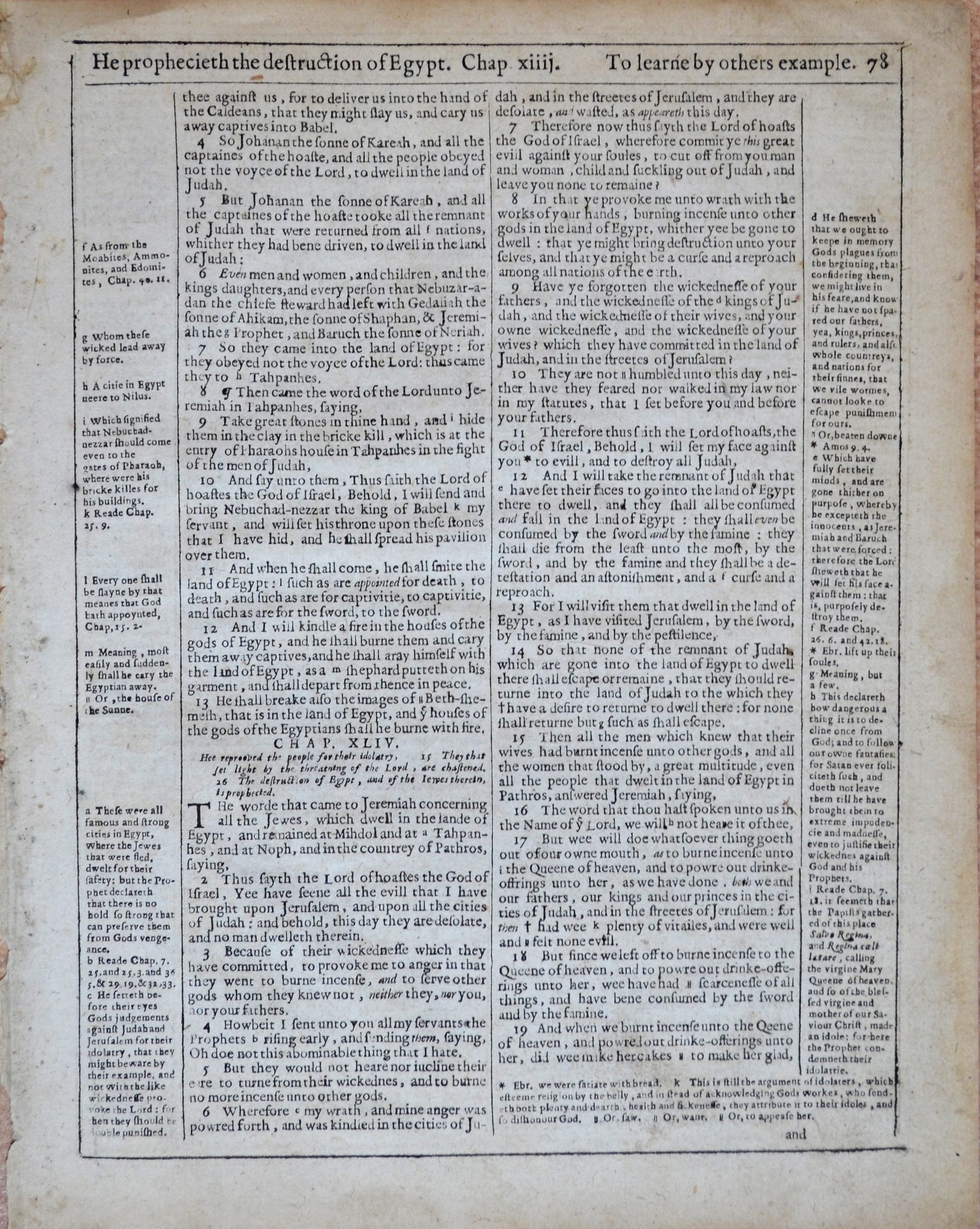
This page shows Jeremiah 43:4-44:19 using a Roman typeface from the First Edition of 1560.
Geneva Bible Various Editions 1560-1644

This page shows 1 Samuel chapter 1 in a Gothic Black type style. While the first edition would be printed in Roman or Gothic. This page was printed between 1560 and 1644.
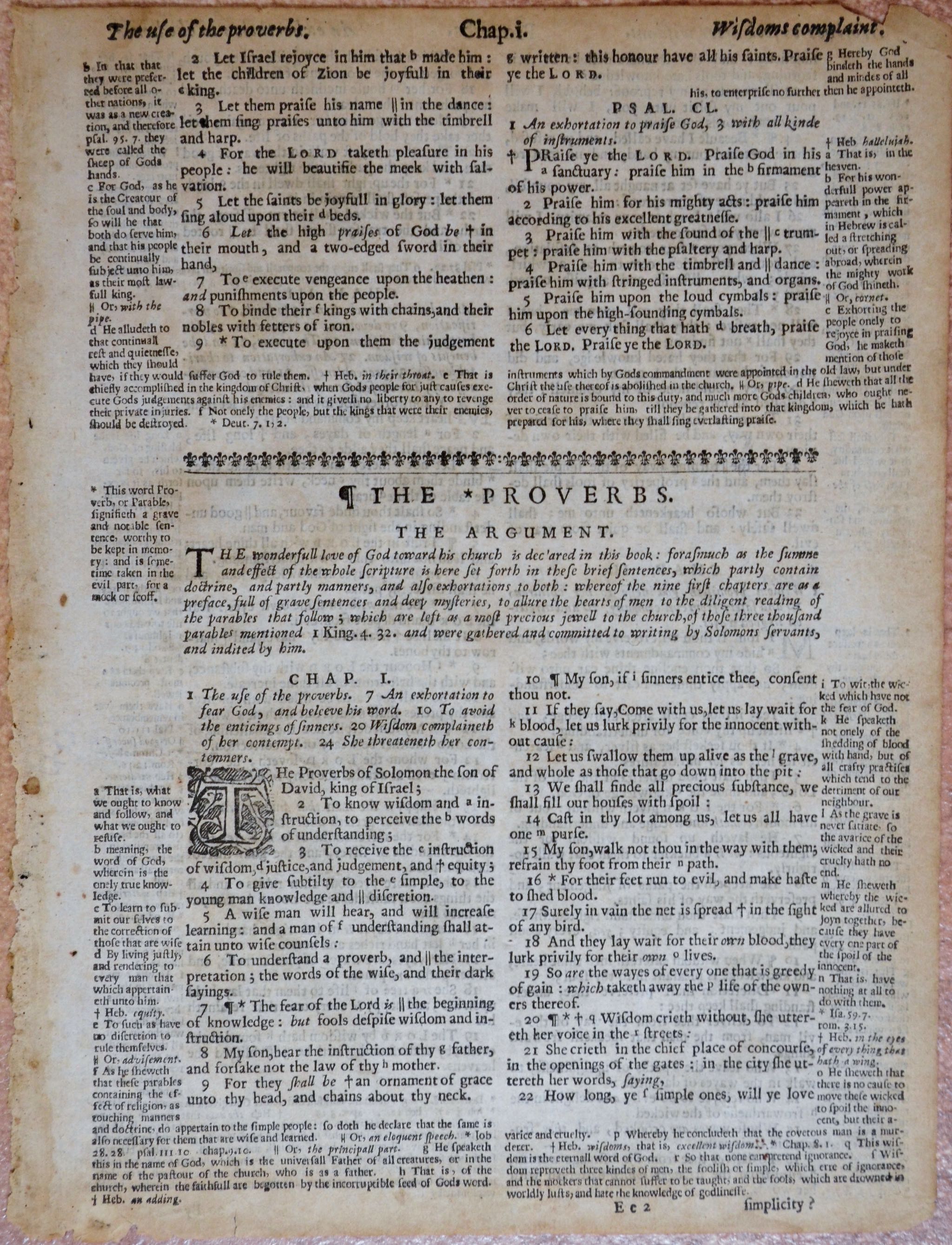
This page show Proverbs chapter 1 printed between 1560 and 1644 in a Roman typeface.

This page shows Jeremiah 32:34-33:19 printed in a Gothic typeface between 1560 and 1644.
Geneva Bible Small Folio Edition 1576

Shown here are two exceptionally rare pages from Leviticus & Numbers printed using a Roman typeface from the 1576 English printing of the small folio edition.
Geneva Bible Folio Edition 1578

This page shows Numbers 7:11-57 in a Gothic typeface from the 1578 London printing of the first folio edition.

This page shows Daniel 11:5-27 with copious notes in a Gothic typeface from the 1578 London printing of the first folio edition.
Geneva Bible "Breeches" Edition 1599
These pages are from so-called Breeches Bibles (because they use the word
breechesto describe the garments that Adam and Eve made out of fig leaves in Genesis 3:7). This wording first appeared in 1579.
These pages are both described as from the 1599 edition but are clearly different printings since one uses a Roman and the other uses a Gothic typeface. Shortly after the King James Bible was first published in 1611, James I banned the printing of new editions of the Geneva Bible with the idea of boosting sales of his, less popular, version at the expense of the much more popular Geneva. Robert Barker, son of Christopher Barker who died in 1599, continued to print Geneva Bibles even after the ban, placing the spurious date of 1599 on new Geneva Bible copies even though they were actually printed by him up until 1625. As the King's Printer, Robert Barker also published and partly printed the King James Bible in its first edition of 1611.
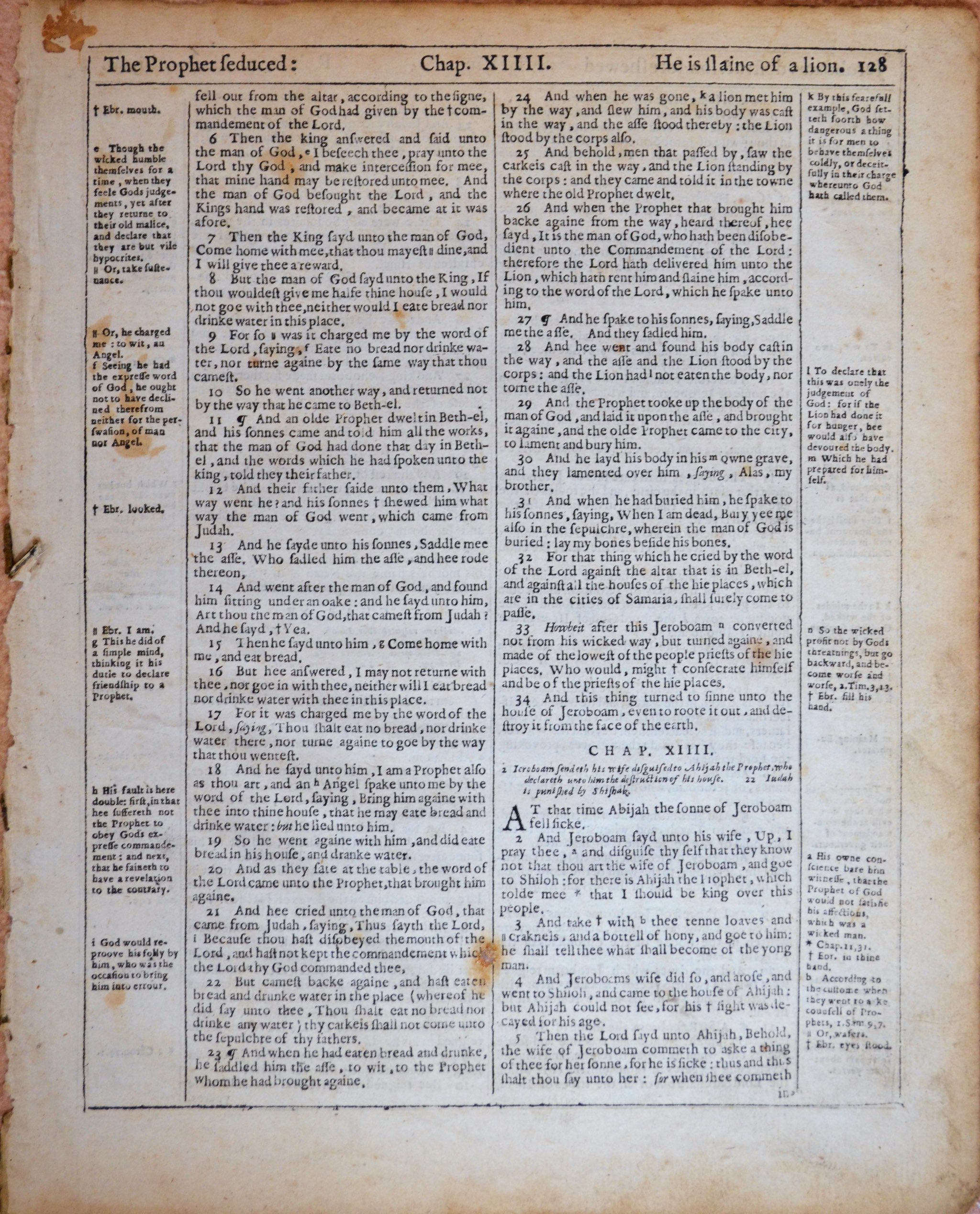
This page shows 1 Kings 13:6-14:5 from a Breeches Bible printed in London (with a Roman typeface) using Christopher Barker as the printer's name and dated as 1599.
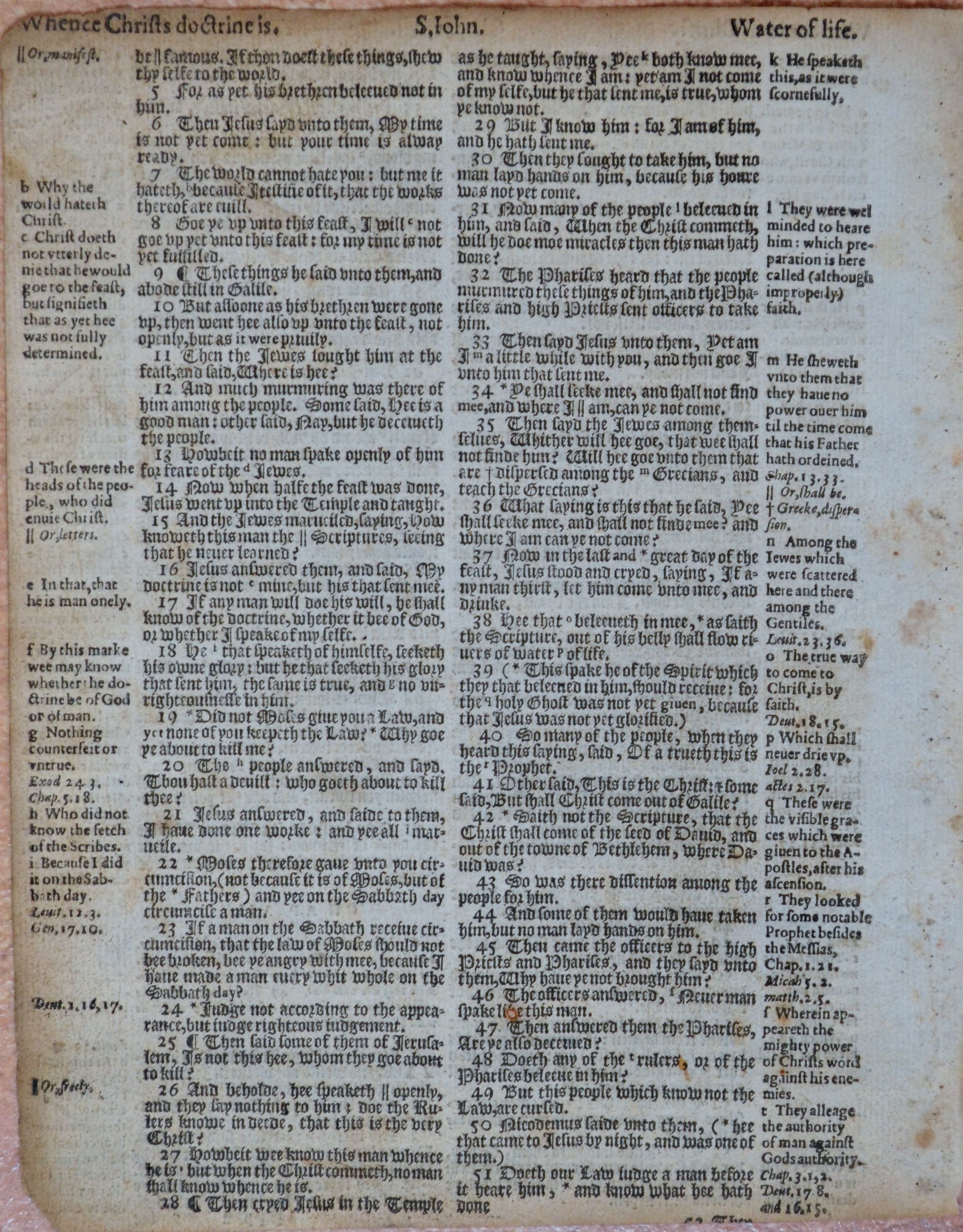
This page shows John 7:5-51 from a Breeches Bible printed in London (with a Gothic typeface) using Christopher Barker as the printer's name and dated as 1599.